
Stop Measuring the First Basket: Why Dispensary Growth Requires a Lifetime Value Mindset
March 1, 2026
Are You Actually Driving New Customers Or Just Measuring the Ones You Already Had
March 31, 2026Stop Measuring the First Basket: Why Dispensary Growth Requires a Lifetime Value Mindset
March 1, 2026Are You Actually Driving New Customers Or Just Measuring the Ones You Already Had
March 31, 2026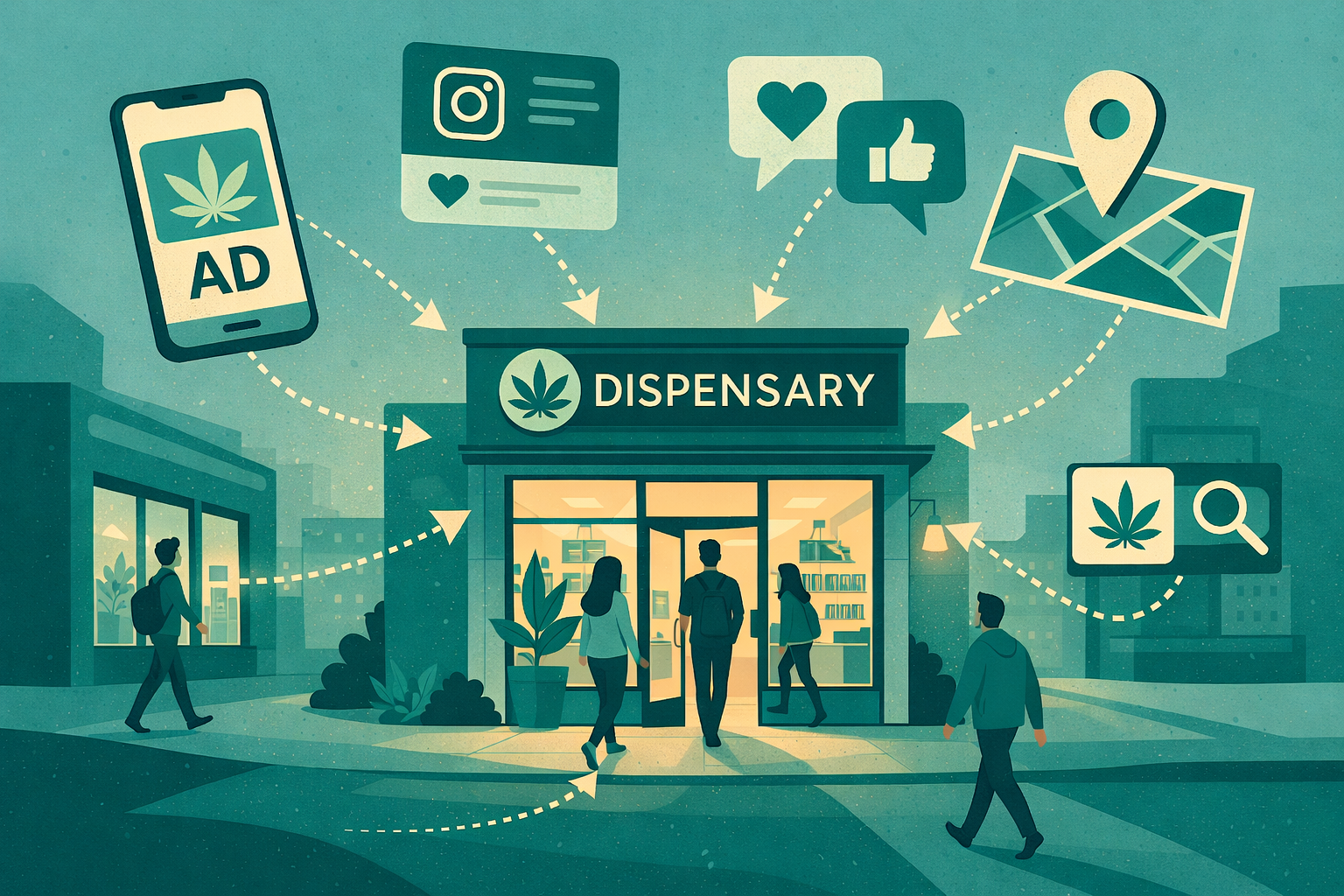
Recently during a conversation with a dispensary client, they asked a question that almost every operator eventually asks.
“How do we know someone walked into the dispensary because they saw our ad? What if they came because they saw our location… or an Instagram post… or heard about us from a friend?”
It’s a fair question.
And it gets to the heart of how cannabis marketing actually works.
Because the truth is, a customer’s decision to visit a dispensary is rarely driven by a single moment.
It’s usually the result of multiple brand exposures over time.
The Myth of the Single Marketing Trigger
Many marketing dashboards imply that one interaction caused the conversion.
A person clicks an ad.
A person redeems an offer.
A person visits a website.
The system records that interaction and assigns credit.
But real-world consumer behavior is rarely that simple.
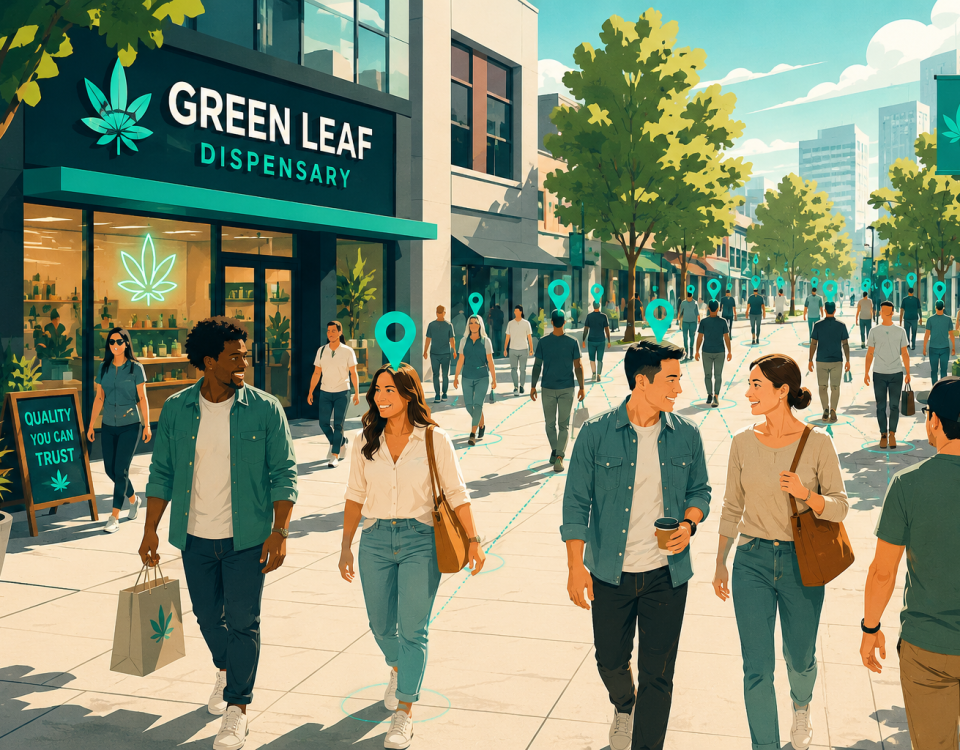
Someone might:
- See a digital ad for your dispensary on Monday
- Drive past your storefront on Wednesday
- See a friend mention your brand or a product drop on social media on Friday
Then on Saturday they decide to stop in.
Which of those moments caused the visit?
The honest answer is that all of them played a role.
Dispensary marketing works through accumulated familiarity and reinforcement, not just a single trigger.
Even Asking Customers Won’t Give You the Full Answer
Some operators try to solve this by asking customers directly.
“How did you hear about us?”
While helpful, those answers rarely capture the full picture.
Customers tend to remember the last thing they saw, not every influence that contributed to their decision.
A shopper might say:
“I saw you on Instagram.”
But perhaps they had also:
- Seen a digital ad earlier that week
- Driven past the dispensary multiple times
- Heard about the store from a friend
The final touchpoint is simply the one they remember most clearly.
The rest of the influence remains invisible.
Why Dispensary Marketing Is a Layered Effect
This is why successful cannabis marketing rarely relies on a single channel.
Growth happens when your brand shows up consistently across multiple places.
A potential customer might encounter your dispensary through:
- Digital advertising
- Social media
- Driving past the store
- Word of mouth
- Menu platforms like Weedmaps or Leafly
- Local search results
Each exposure builds familiarity.
Each exposure reduces friction.
Eventually the dispensary moves from unfamiliar to recognizable.
And recognition drives visits.
Marketing is not a light switch.
It’s a momentum-building process.
What Measurement Actually Tells You
The goal of modern attribution isn’t to claim that a single advertisement forced someone to walk through your doors.
The goal is to understand whether your marketing activity is increasing the likelihood of visits over time.
When campaigns launch and dispensary visits increase, that’s a measurable signal.
When customer acquisition accelerates after expanding your brand presence, that’s another signal.
Attribution doesn’t attempt to simplify complex human decision-making.
Instead, it helps operators understand whether their marketing investments are influencing real-world behavior in the right direction.
Why NXTeck Solves the Attribution Problem
If marketing decisions are influenced by multiple exposures, the natural question becomes:
How do you measure which marketing investments are actually driving customers into your dispensary?
While no system can perfectly map every influence that led someone to choose a store, the most direct form of attribution is connecting ad exposure to a verified store visit.
In simple terms:
Did someone see your ad?
And did that same device later appear at your dispensary location?
When those two events occur in sequence, you have a clear signal that your advertising investment contributed to a real-world visit.
This is exactly where NXTeck provides value.
By measuring when a consumer is exposed to an advertisement and later appears at a targeted dispensary location, operators gain the most direct connection between what they spent on advertising and actual store traffic.
It doesn’t rely on someone clicking a link.
It doesn’t rely on someone remembering how they heard about you.
It measures what matters most: people walking into your dispensary.
Why Other Marketing Signals Are Harder to Measure
That doesn’t mean other marketing channels aren’t important.
Maintaining an active social media presence, updating your website, and showing up consistently across digital platforms all reinforce your brand.
In many cases, those efforts absolutely contribute to growth.
But they are extremely difficult to measure with precision.
For example:
You post something on social media.
The following week you notice an increase in store traffic.
It’s easy to assume the two events are connected.
But how do you know customers actually saw the post?
How do you know that was the moment that influenced their decision?
Perhaps they saw the post.
Perhaps they drove past your dispensary later that week.
Perhaps they saw a digital advertisement earlier in the month.
Without a way to connect marketing exposure to real-world visits, most of these channels rely on assumptions rather than verified outcomes.
Measuring What Matters Most
At the end of the day, dispensary marketing success comes down to one thing:
Did more customers walk through your doors?
By measuring whether someone saw an advertisement and later visited your dispensary, operators gain the clearest signal available that their marketing investment is influencing real-world behavior.
It doesn’t eliminate the layered nature of marketing.
But it provides something many operators have never had before:
A direct connection between advertising spend and in-store traffic.
The Strategic Takeaway
The question isn’t whether one ad directly caused a customer to visit your dispensary.
The real question is whether your marketing is increasing the probability that someone chooses your store when the moment to buy arrives.
Because customers don’t experience marketing in isolated events.
They experience it as a series of impressions that build familiarity over time.
The dispensaries that win aren’t the ones relying on a single marketing trigger.
They’re the ones that show up consistently enough that when someone decides it’s time to shop, the choice already feels obvious.
Measure what actually matters. Connect advertising to real dispensary visits with NXTeck.
Contact info@nxteck.com or get started at nxteck.com